



Blogs
Is Your Child Ready for the Next Grade? A Parent’s Guide to School Transition and Confidence
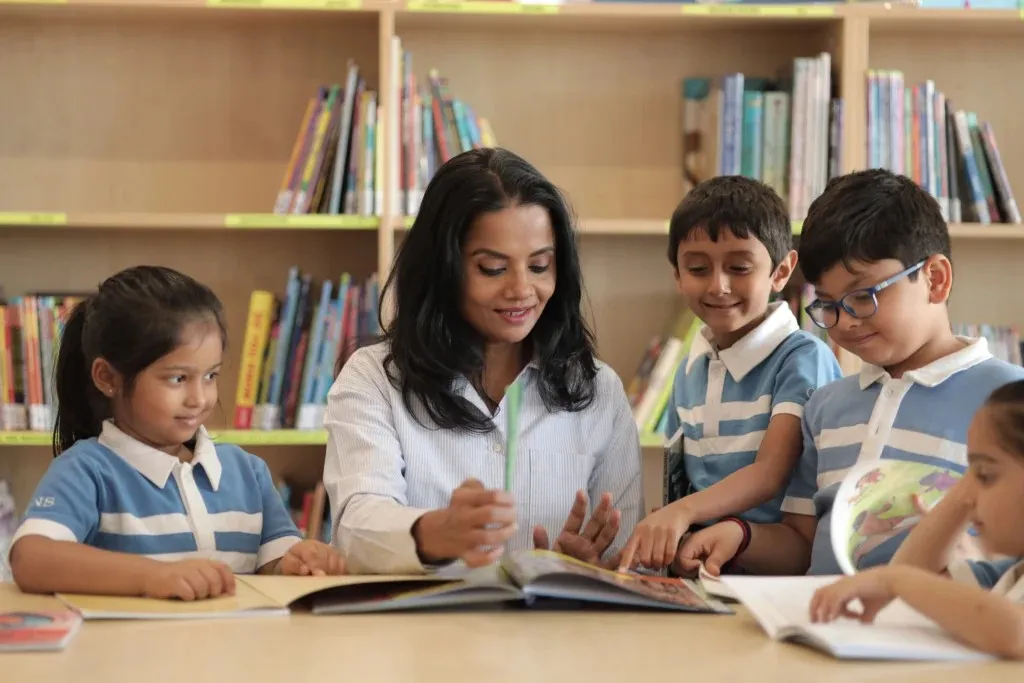
The question most parents ask at the end of an academic year is not just whether their child has passed but whether they are truly ready to move ahead.
Readiness is more than marks. It is how a child responds to change, handles responsibility, manages new expectations and carries confidence into a more demanding classroom.
At Chatrabhuj Narsee Kandivali, this is seen as one of the most important parts of a child’s academic journey. A child who moves forward with confidence learns better, adapts faster and settles into new environments with far less stress.
That is why school transitions deserve more attention than they usually get. They are not administrative milestones. They are developmental turning points.
Understanding Readiness Beyond Report Cards
Many parents equate readiness with performance. If the child is doing well in tests, they must be ready for the next grade. That is only partly true.
Academic readiness includes strong fundamentals, but it also includes emotional and behavioural stability. A child may know the answers in class and still struggle with change. They may be capable of the work and yet hesitate in a new environment. They may understand a lesson but feel unsure when the pace increases.
This is especially relevant in structured learning stages such as Cambridge Primary, where children begin to move from exploratory learning into more concept-based and independent work. The transition is not only about harder content. It is about learning how to think, respond and participate with more consistency.
At Chatrabhuj Narsee Kandivali, readiness is therefore viewed through a wider lens. Children are not judged only by output. They are observed for curiosity, confidence, classroom comfort, and their ability to recover from small setbacks.
Why School Transitions Can Feel Harder Than They Look?
A school transition often feels difficult for reasons that have little to do with academics alone.
A child may be entering a new class, a new routine, or a more demanding curriculum. They may face unfamiliar teachers, different classroom expectations, or a sharper need for independence. Even a capable learner can feel unsettled by this change.
This is where parents often need practical school transition tips. The goal is not to eliminate every challenge. The goal is to reduce the shock of change.
A smooth transition usually depends on three things: predictability, encouragement, and pace. Children need to know what is changing, why it matters and how they can succeed in the new setting. When that is missing, even small adjustments can feel overwhelming.
This is also why conversations around CBSE to IB transition matter. The issue is rarely intelligence. It is adjustment. The child is being asked to move into a different learning rhythm, and that requires time, support and reassurance.
At CNS Mumbai, transition is treated as a gradual process. Children are not expected to become instantly independent. They are guided into greater responsibility step by step.
A Parent’s Role in Building Confidence
A strong parenting guide for school transition starts at home. Children absorb far more than parents realise from the way change is discussed. If school progression is treated like a test, children begin to fear it. If it is treated like a natural stage of growth, children are more likely to welcome it.
Parents can support the transition by doing a few simple things consistently. Keep routines steady. Talk positively about new classes and teachers. Avoid comparing the child with siblings or classmates. Ask more about how the child feels and less about whether they were the best in the room.
Confidence grows when a child feels safe making mistakes. It grows when effort is noticed, not just results. It grows when the home environment says, “You can handle this,” before the child fully believes it themselves.
At Chatrabhuj Narsee Kandivali, this partnership between school and home matters deeply. Children transition best when the adults around them are aligned on one message: growth is expected and support is available.
How Can Schools Make Transition Feel Natural?
The best schools do not treat transitions as sudden jumps. They build them into the rhythm of learning.
That means increasing challenge gradually, encouraging independent work at the right pace, and helping children understand expectations before they are fully tested on them. In systems like Cambridge Primary, this is especially important because the academic culture encourages understanding, not just memorisation.
The same principle becomes even more important when families eventually begin thinking about larger shifts such as CBSE to IB transition. Once again, the success of the transition is not only about curriculum. It is about how prepared the child feels to meet a new way of learning. A strong school will make sure that the child is not simply promoted, but prepared.
At Chatrabhuj Narsee Kandivali, that preparation is reflected in how educators support emotional comfort, classroom adjustment and academic independence at the right pace.
Confidence is the Real Outcome
A child who is ready for the next grade is not necessarily the one who knows everything. They are the ones who can keep learning without fear. That is the real goal of any meaningful parenting guide for school transition. Not perfection. Not pressure. But confidence. When children feel supported, they handle new expectations with more calm. When they understand what is ahead, they adapt more easily.
Whether your child is stepping into Cambridge Primary, navigating a new academic stage at Chatrabhuj Narsee Kandivali, or later preparing for a broader CBSE to IB transition, the principle stays the same: readiness is built, not assumed.
And when it is built well, confidence becomes the natural result.