
Blogs
The Heart of IBDP at Chatrabhuj Narsee School, Kandivali: Shaping Tomorrow’s Leaders through TOK, CAS, and EE
Imagine a triangle where each point represents a different perspective: thinking, doing, and creating. This perfectly describes how students at Chatrabhuj Narsee School, Kandivali experience the International Baccalaureate curriculum. At CNS, the three parts – Theory of Knowledge (TOK), Creativity, Activity, Service (CAS), and Extended Essay (EE) – form a cohesive, interconnected educational journey. Each component alone has its strengths, but together they create a holistic learning experience that prepares students to be well-rounded, critical thinkers ready for future challenges.
Theory of Knowledge: The Questioning Skill at CNS
In TOK, CNS students are encouraged to ask fundamental questions about knowledge itself. How do we know what we claim to know? What makes some evidence more reliable than others? At CNS, TOK sessions are designed to spark discussions that go beyond classroom walls, allowing students to analyze real-world issues through multiple perspectives.
For instance, CNS students exploring historical events critically assess differing accounts, uncovering the biases that shape narratives. They reflect on how perspectives—whether rooted in reason, emotion, or culture—impact understanding. This questioning skill, nurtured by experienced TOK facilitators at CNS, helps students apply critical thinking to all their subjects and even their day-to-day decisions.
Creativity, Activity, Service: Learning from Doing at CNS
At Chatrabhuj Narsee School Mumbai, the CAS programme transforms theory into meaningful action, emphasizing holistic growth through three interconnected areas:
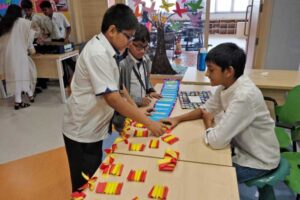
-Creativity: Students at CNS bring innovative ideas to life, from organizing art exhibits and creating public awareness campaigns to designing apps that address community needs.
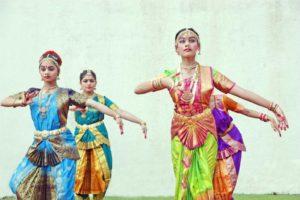
– Activity: Physical well-being is prioritized, with students participating in fitness challenges, dance classes, and school sports initiatives, learning the importance of balancing health with academics.
– Service: CNS students actively contribute to their communities, whether by mentoring younger peers, leading eco-friendly drives, or supporting NGOs. These activities foster empathy, responsibility, and leadership.
CAS at CNS isn’t just an add-on; it’s a transformative journey where students realize their potential and impact, making meaningful contributions to society.
Extended Essay: The Research Adventure
The Extended Essay marks a student’s first significant leap into academic research at CNS. This 4,000-word paper, which might seem daunting, is an exciting opportunity for students to explore topics they are passionate about.
Think of the Extended Essay as a personal journey. For example, a CNS student interested in environmental science may study the impact of microplastics on Mumbai’s water bodies, while another with a love for literature might explore how Indian culture is reflected in regional translations of Shakespearean plays. This journey not only builds academic rigor but also strengthens time management, organization, and intellectual perseverance. Through this process, students gain vital skills:
– Crafting a research question
– Following proper research methods
– Academic writing techniques
– Time management and organization
– Appreciating mentorship and feedback
Interconnections: Bridging TOK, CAS, and EE at CNS
The true strength of the DP core at Chatrabhuj Narsee School Kandivali lies in the meaningful connections students make between TOK, CAS, and EE. A student working on a CAS project about reducing school waste might use insights from their environmental science Extended Essay to inform their initiative. TOK discussions about ethical responsibility might provide the philosophical foundation for these efforts.
This synergy ensures that learning at CNS is not fragmented but holistic, preparing students to think critically, act responsibly, and research effectively.
More Than School Success
The DP core at CNS prepares students for more than just academic success. It builds skills that contribute to their growth as individuals, such as:
- Critical thinking: Students learn to evaluate information and approach challenges with open-mindedness.
- Research and writing: EE prepares them for the rigors of university-level academics.
- Organization and leadership: CAS activities enhance time management and collaborative skills.
- Ethical decision-making: TOK fosters an awareness of cultural and ethical dimensions.
- Global awareness: Students develop sensitivity to diverse perspectives, fostering global citizenship.Future Outlook
As we prepare our students for a future that is increasingly interconnected and complex, the DP core at CNS is more important than ever. The ability to think critically (TOK), engage with communities (CAS), and conduct independent research (EE) are crucial skills in today’s world.
The DP core at CNS isn’t just about meeting requirements or earning points for the diploma. It’s about developing intellectual, personal, and social skills that will benefit students throughout their lives. It’s about cultivating learners who are curious, skilled, and eager to contribute positively to the world.
As CNS Mumbai students navigate these core components, they don’t just acquire knowledge – they build understanding. They learn to not only observe the world but to question it, engage with it, and ultimately make it better.